Posts

Coronavirus a Threat to World…

World Health organization emergency committee decided to declare international public health emergency on 30 th January 2020 meeting.   WHO China country office was informed on 31 December, 2019 about a virus which does not match with any other known virus in Wuhan. One week later, Chinese Authorities confirmed that they had identified a new virus named as coronavirus, which is a family of viruses that include common cold, SARS and MERS viruses. WHO and Chinese authority both are working coordinately to find treatment of this virus.  According to chines officials 170 people have died due to coronavirus. More than eight thousand cases have been confirmed. Thousands of people from different countries are trapped in china to avoid outbreak of coronavirus. Four of and estimated five hundred Pakistani students are already confirmed to have coronavirus.    Pakistani students in china are requesting Pakistan embassy to their safe escape from china. Families of studen...

ABETALIPOPROTEINEMIA (BASSEN-KORNZWEIG SYNDROME) Retinopathy

Image
Abetalipoproteinemia, also known as Bassen-Kornzweig syndrome, is a rare genetic disorder that affects the body's ability to absorb and transport fats and fat-soluble vitamins. One of the ways that abetalipoproteinemia can affect the eyes is by causing retinitis pigmentosa, a condition that causes vision loss. Retinitis pigmentosa is a degenerative eye disease that affects the retina (the light-sensitive layer at the back of the eye). It is characterized by the gradual loss of photoreceptor cells (cells that detect light and send signals to the brain) and the accumulation of pigment in the retina. This can cause vision loss and may lead to blindness in severe cases. Abetalipoproteinemia can also cause optic atrophy, a condition in which the optic nerve (the nerve that carries visual information from the eye to the brain) becomes thin and weak. This can cause vision loss and other visual problems. In conclusion, abetalipoproteinemia can affect the eyes by causing reti...

Pinguecula

Image
A pinguecula is a small, raised, yellowish growth on the conjunctiva (the clear, thin membrane that covers the white part of the eye). It is a benign (non-cancerous) condition that is common in people who spend a lot of time outdoors, especially in sunny or windy conditions. Pingueculae are made up of fats, proteins, and other substances and are usually harmless, but they can cause discomfort and irritation if they rub against the cornea (the clear, dome-shaped structure at the front of the eye) or the lens (the transparent structure behind the iris). They can also cause vision problems if they become large or obstruct the field of vision. Pingueculae can be diagnosed during a comprehensive eye exam, during which the eye care professional will examine the eye and may use specialized instruments to examine the conjunctiva and other parts of the eye. They are usually benign and do not require treatment, but if they are causing discomfort or interfering with vision, they can be r...

Lattice degeneration

Lattice degeneration:  5% to 10% of the population, varies in extensiveness but 30% of all RRDs.  It is commoner in myopes and connective tissue syndromes ( Stickler).  usually asymptomatic.  typically detected as an incidental finding during routine ophthalmoscopy Thin, well-demarcated, pigmented ovoid patches of retina typically circumferential but may be radial ( in Stickler). Within the involved area, there may be sclerotic vessels or atrophic holes. Although usually darkly pigmented, it may appear hypo-pigmented The vitreous overlying lattice degeneration is liquefied while on the edges of lattice, there is firm vitreoretinal adhesion Complications:  Retinal tears may occur at posterior margin and at the ends of areas of lattice (due to strong vitreous adhesion)  retinal detachment. in only 1% of patients with lattice degeneration. Prophylactic laser treatment is not usually performed in asymptomatic eyes  laser treatme...

Ophthalmologist and optometrist: what differences are there?

Image
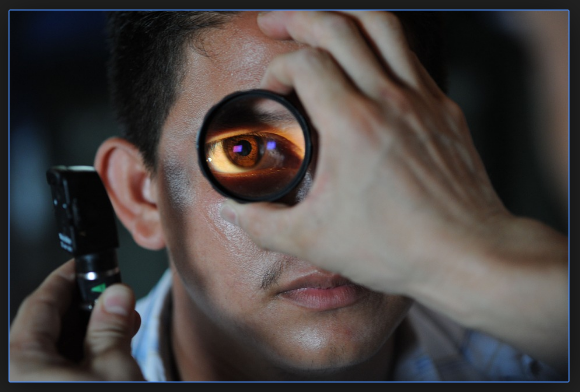
Ophthalmologist and optometrist: what differences are there? When we suffer from eye discomfort it is important to always go to a specialist to explore and value what treatment we should follow. Sometimes we find it a bit confusing to know which professional we should go to. Who do we have to ask for a visit with when we have a visual problem? Ophthalmologist or optometrist? Although an ophthalmologist and an optometrist often work side by side and complement each other to ensure the patient's well-being, each professional performs very different functions and, therefore, their training is also different. Fig. Eye Exam What is an ophthalmologist? An ophthalmologist (or oculist) is a doctor specializing in eye health that is responsible for the diagnosis, treatment and prevention of pathologies related to the eyes and vision, the optical path and the annexes such as eyelids, lacrimal and extra ocular muscles. . The ophthalmologist and / or oculist ...

Eyelid Anatomy and Physiology

Image
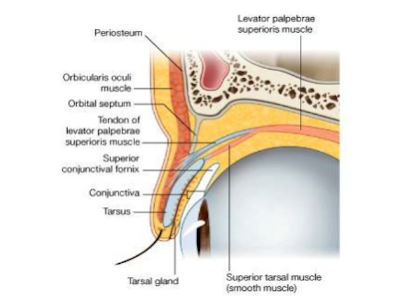
ANATOMY AND PHYSIOLOGY OF THE EYELID two musculomembranous veils located in front of the eyeball, which can be placed in contact with each other or separated to leave a more or less large part of the anterior face of the eyeball free. The upper eyelid is taller and more mobile than the lower eyelid. Anterior side: It is convex when the patches are in contact. Molded on the eyeball, it is covered by the skin. Posterior Side: It is concave, lined by a mucosa (laconjuntiva), and is molded on the globe. Ends: The two eyelids are joined at their ends by two commissures, the medial, slightly salient, and the lateral, more elongated and prolonged by the "wrinkles" that accentuate with age (crow's feet. In pathologies the palpebral free edge should be examined well, we will find the glands that are more towards the periphery, the ducts. ARTERIES: The eyelids are very vascularized formations. Each of them has a main artery: upper palp...

Lattice degeneration;

Lattice degeneration; ✍️ 5% to 10% of the population, varies in extensiveness but 30% of all RRDs. ✍️ It is commoner in myopes and connective tissue syndromes ( Stickler). ✍️ usually asymptomatic. ✍️ typically detected as an incidental finding during routine ophthalmoscopy. ✍️ Clinically ☝️Thin, well-demarcated, pigmented ovoid patches of retina ☝️ typically circumferential but may be radial ( in Stickler). ☝️Within the involved area, there may be sclerotic vessels or atrophic holes. ☝️Although usually darkly pigmented, it may appear hypopigmented ☝️The vitreous overlying lattice degeneration is liquefied while on the edges of lattice, there is firm vitreoretinal adhesion ✅ complications ✍️ Retinal tears may occur at posterior margin and at the ends of areas of lattice (due to strong vitreous adhesion) ✍️ retinal detachment. ☝️in only 1% of patients with lattice degeneration. ☝️Prophylactic laser treatment is not usually performed in asymptomatic eye...